India has steadily positioned itself as one of the world’s most trusted destinations for advanced medical treatment.
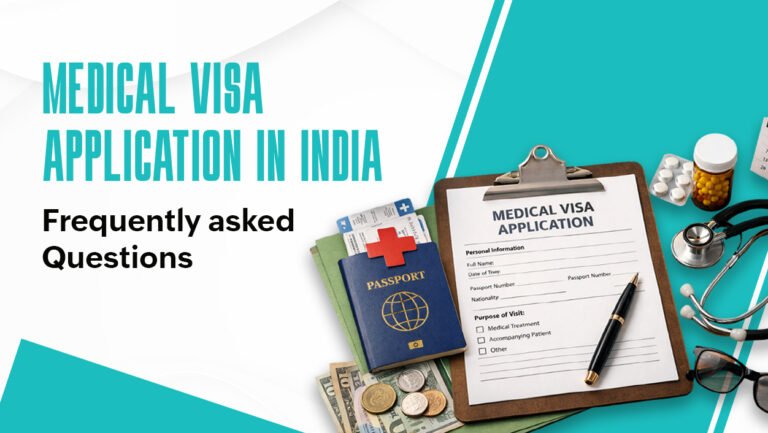
Every year, a growing number of international patients travel to India for complex procedures such as organ transplants, cardiac surgery, oncology care, orthopedics, neurosurgery, fertility treatment, and rehabilitation.To support this demand, the Government of India has established a structured Medical Visa for India framework that allows foreign nationals to enter the country specifically for medical care. This system is designed to align immigration processes with real clinical timelines rather than short-term travel needs.
For patients planning treatment abroad, understanding the medical visa process is as critical as selecting the right hospital or specialist. Visa delays, incorrect documentation, or selecting the wrong visa category can disrupt treatment schedules and add unnecessary stress during an already vulnerable period. This guide explains the Indian medical visa process with current compliance requirements, practical clarity, and real-world relevance for international patients.
What Is a Medical Visa for India?
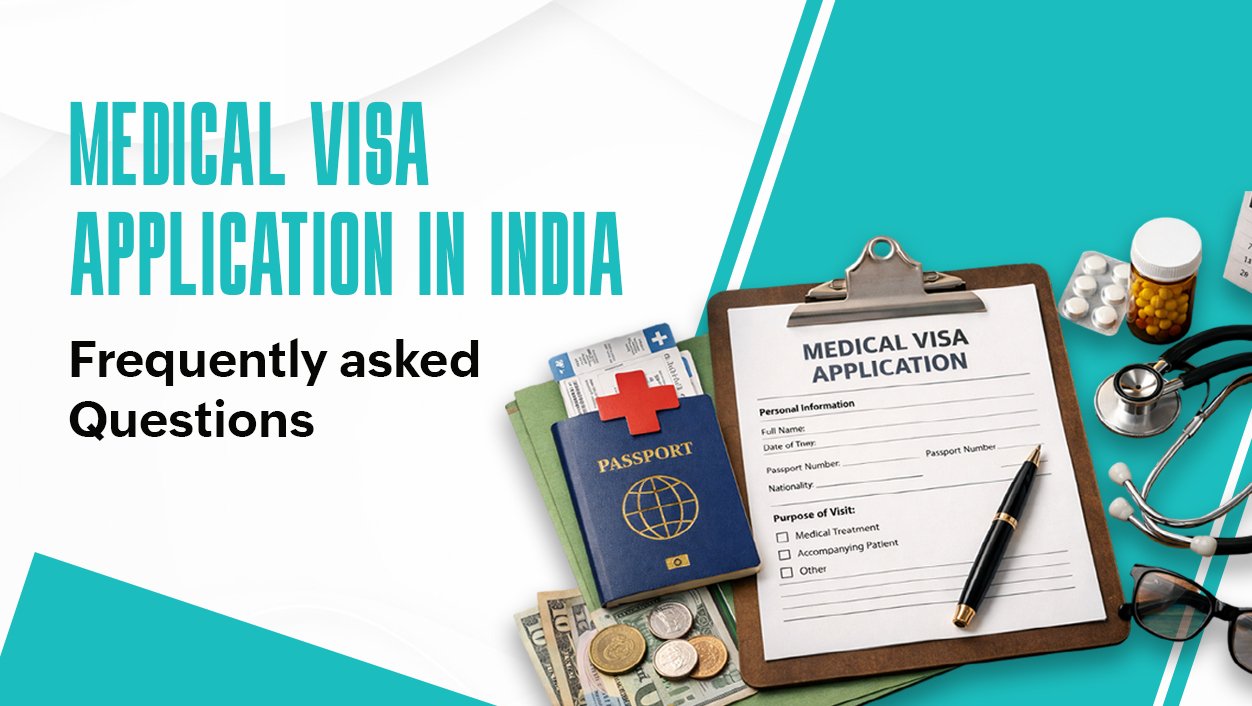
A Medical Visa to India is a dedicated visa category issued to foreign nationals whose primary purpose of travel is to receive medical treatment at a recognized and registered healthcare facility in India.
Unlike a tourist visa, a medical visa permits longer stays, multiple entries, and structured extensions when treatment timelines demand it. This makes it suitable for procedures that require pre-operative evaluation, staged treatment, post-operative monitoring, or rehabilitation.
Medical visas are issued for treatments such as organ transplants, cancer therapy, cardiac procedures, neurosurgery, orthopedic surgery, fertility treatment, bariatric surgery, and advanced interventional care.
India currently offers both e-Medical Visas and regular Medical Visas, depending on nationality, treatment duration, and clinical complexity.
Why International Patients Choose India for Medical Treatment
India’s position in global medical travel is driven by scale, experience, and predictability. Many Indian hospitals operate some of the highest-volume programs globally in specialties such as liver transplant surgery, kidney transplant, cardiac surgery, and oncology.
For international patients, this translates into shorter waiting times, access to multidisciplinary teams, and treatment planning that often begins before arrival. Clinical protocols at major centers align with international standards, while treatment costs remain significantly lower than in the United States, the United Kingdom, or Europe.
This ecosystem is supported by a medical visa system designed to accommodate medical realities rather than tourism timelines.
Who Is Eligible for a Medical Visa to India?
International patients are eligible for an Indian medical visa if their primary reason for travel is treatment at a government-recognized hospital or medical institution in India.
Applicants must meet the following conditions:
- A valid passport with sufficient validity
- Medical documentation supporting the need for treatment
- A confirmed appointment or treatment invitation from a registered Indian hospital
- Proof of financial capacity to cover treatment and stay
Patients are permitted to bring up to two attendants under a Medical Attendant Visa, which runs concurrently with the patient’s medical visa.
Medical visas are commonly issued for organ transplants, oncology care, cardiac procedures, neurosurgery, orthopedic surgery, fertility treatment, and long-term rehabilitation.
It is important to note that surrogacy in India is strictly prohibited under a Medical Visa. Attempting to use a medical visa for surrogacy-related purposes can result in permanent blacklisting.
Types of Medical Visas Available in India
e-Medical Visa
The e-Medical Visa is applied for online through the official Government of India portal. As per current regulations, the e-Medical Visa is valid for 120 days from the date of grant of ETA, with a maximum stay of 60 days per visit and triple entry permitted.
This visa is suitable for patients whose treatment, hospitalization, and initial recovery fall within this period. While the visa itself is not extendable online, medically justified extensions can be requested through the Foreigners Regional Registration Office (FRRO) after arrival.
A critical compliance requirement is hospital pre-validation. The treating hospital optionally uploads the patient’s case and invitation through the Heal in India portal, also referred to as the Medical Value Travel system. Without this step, the e-Medical Visa application is automatically rejected by the system.
Regular Medical Visa
Patients requiring long-term treatment, staged procedures, or extended recovery periods typically apply for a regular Medical Visa through the Indian Embassy or Consulate.
This visa can be issued typically 6 months; extendable via FRRO up to treatment duration, whichever is shorter. It offers greater flexibility for extensions and is commonly used for organ transplant patients, oncology cases, and rehabilitation-focused care plans.
AYUSH Visa
India also offers a separate AYUSH Visa category for patients seeking treatment under traditional systems such as Ayurveda, Yoga, Unani, Siddha, or Homeopathy.
Patients traveling specifically for AYUSH-based rehabilitation or treatment at recognized AYUSH facilities should apply under this category rather than a standard medical visa.
Medical Visa for Organ Transplant Patients
Patients traveling for liver transplant surgery in India, kidney transplant, or other organ transplants require careful visa planning.
Transplant treatment involves multiple stages including evaluation, donor assessment, surgery, intensive post-operative care, and follow-up before travel clearance. India is globally recognized for its expertise in living donor liver transplantation and kidney transplantation, but strict legal and ethical regulations apply.
Living donors must be near relatives, and all transplant cases are reviewed by authorization committees to prevent organ trafficking. From a visa perspective, transplant patients typically enter India on a medical visa supported by a hospital-issued pre-validation certificate uploaded through the Heal in India portal.
Documents Required for an Indian Medical Visa
Medical visa applications are documentation-driven, and accuracy is critical.
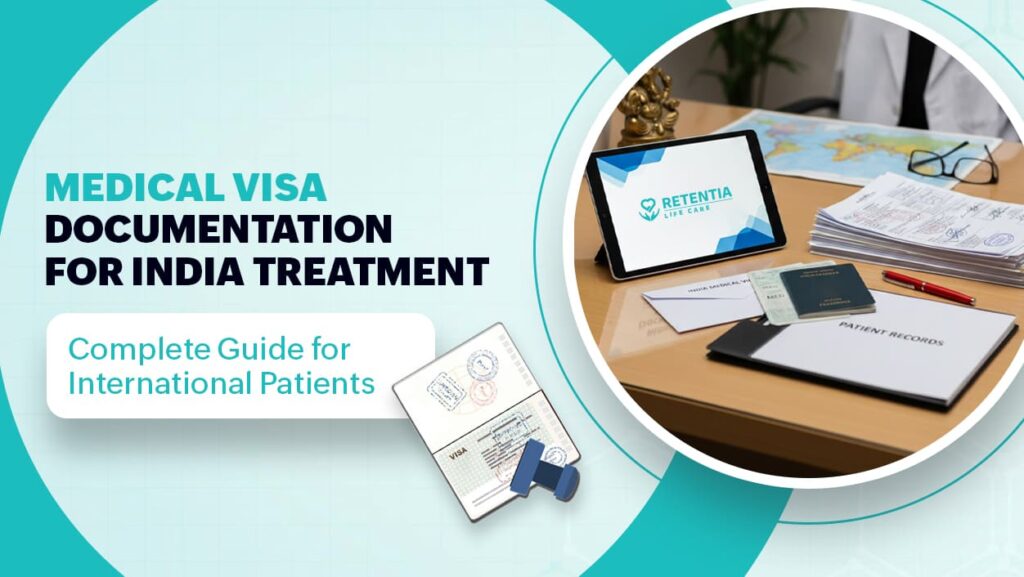
Patients are typically required to submit:
- A valid passport with sufficient validity and blank pages
- Hospital appointment or treatment letter on official letterhead
- Medical reports supporting diagnosis and treatment plan
- Proof of financial capacity such as bank statements
- Passport-size photographs as per specifications
- Completed visa application form
For e-Medical Visas, hospitals must upload the patient’s case on the Heal in India Medical Value Travel portal before the visa application is submitted.
Medical attendants must submit proof of relationship along with their own passport and application documents.
Health Compliance Requirement
Patients arriving from Africa or South America must carry a Yellow Fever Vaccination Certificate. Without it, Indian immigration authorities impose a mandatory six-day quarantine on arrival, which can severely disrupt surgical schedules.
Step-by-Step Medical Visa Application Process
The process begins with medical opinion and hospital selection. Once the hospital reviews the patient’s medical records, it issues an official treatment letter and uploads the case to the Heal in India portal.
The patient then completes the visa application, uploads documents, and pays the government fee. Most complete applications are processed within a few working days.
Upon approval, the Electronic Travel Authorization is issued, and the visa is stamped on arrival at an authorized Indian immigration checkpoint.
Medical Visa Extension and FRRO Registration
If treatment extends beyond initial visa validity, patients may apply for an extension through the FRRO. Extensions are granted based on hospital justification and confirmation of continued treatment.
Patients staying in India for more than 180 days must register with the FRRO within 14 days of arrival.
Common Mistakes That Delay Medical Visa Approval
Most visa delays result from documentation errors rather than eligibility issues. Common problems include missing hospital pre-validation, inconsistent personal details, unclear medical justification, or outdated financial records.
Patients should avoid unofficial agents offering expedited processing. Medical visas are processed only through official government systems.
Coordinating Medical Travel and Continuity of Care for International Patients
For international patients, successful medical travel depends on more than clinical expertise. It requires precise documentation, visa compliance, hospital coordination, post-operative planning, and continuity of care after returning home.
Retentia Lifecare acts as the operational backbone of this journey. By serving as a single coordination point between hospitals, doctors, visa authorities, and caregivers, Retentia Lifecare ensures patients are not caught in bureaucratic loops when they should be focused on recovery. This approach reduces delays, miscommunication, and avoidable complications, particularly in complex treatments such as organ transplants, oncology care, and cardiac surgery.
Final Thoughts
India’s medical visa framework is designed to support international patients seeking advanced, timely, and affordable treatment. When approached with proper planning and accurate compliance, the process is predictable and efficient.
For patients considering treatment in India, the medical visa is not just an entry permit. It is a critical component of the treatment pathway. Understanding how it works allows patients and families to focus on outcomes, recovery, and continuity of care rather than administrative uncertainty.