India attracts over 2 million medical tourists annually, drawn by world class hospitals, affordable costs, and specialised treatments like cardiac surgery, orthopaedics, and oncology. For international patients planning medical travel to India, securing the right visa is a critical first step, yet confusion often arises between the e-Medical Visa and the regular Medical Visa. This blog clarifies the difference between e-Medical Visa and Medical Visa India, helping you choose the best option for your treatment journey.
Whether you’re searching for “medical visa for India requirements,” “how to apply for e-Medical Visa India,” or “validity of Indian medical visa,” we’ll cover it all with practical guidance based on official Indian government rules.
Why Medical Visas Matter for Treatment in India
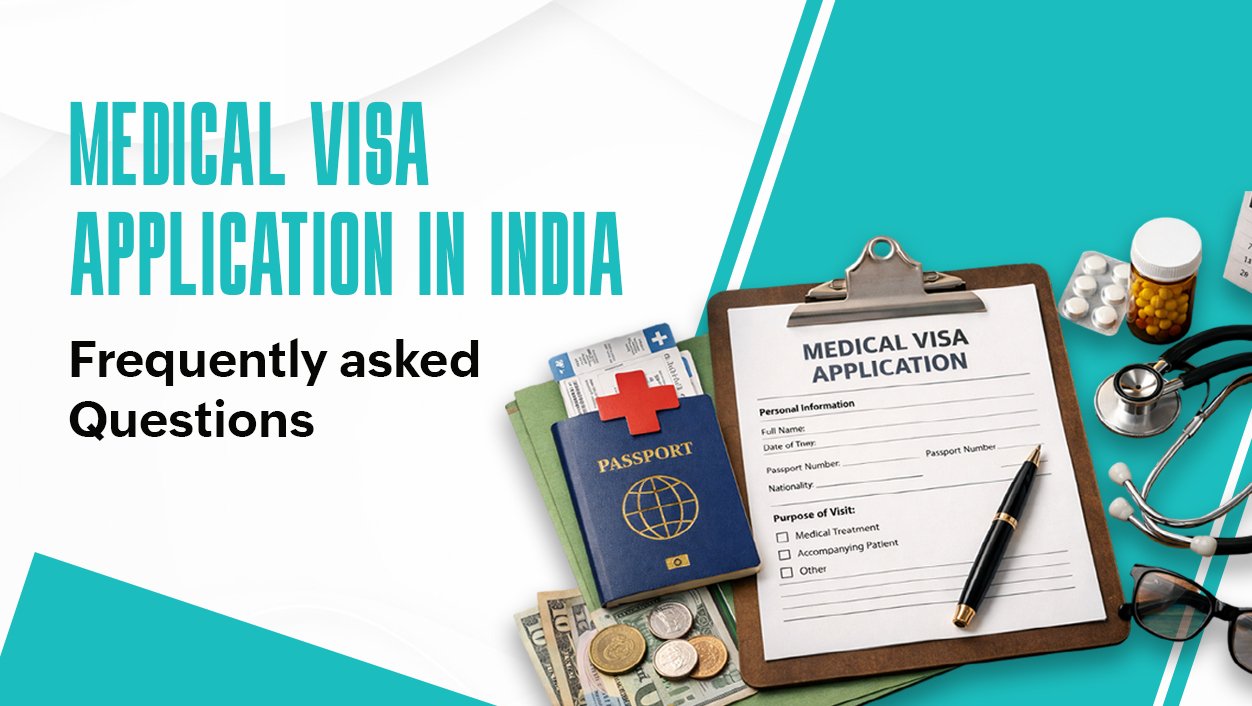
India’s medical visas are designed specifically for patients seeking treatment in recognised hospitals, not general tourism or work. Both e-Medical and regular Medical Visas allow entry for medical procedures, consultations, yoga or Ayurveda, or attendant support, but they differ in application process, speed, entry points, and flexibility.
India has become one of the leading destinations for medical travel, with patients coming from Africa, the Middle East, Central Asia, and Southeast Asia to access advanced treatments. Choosing the wrong type can delay your travel, so understanding Indian medical visa vs e-visa is essential for smooth planning.
What is an e-Medical Visa for India?
The e-Medical Visa is a digital visa introduced to simplify entry for short term medical treatment. It’s fully online, processed quickly, and ideal for urgent or elective procedures under 60 days.
Key Features of e-Medical Visa
- Validity: 60 days from first entry, with triple entry allowed (exit and re-enter up to three times).
- Entry Points: Only designated airports and select seaports.
- Eligibility: Foreign nationals from eligible countries for treatment in government recognised hospitals. Patients needing specialised care must have a hospital invitation letter.
- Attendants: Up to two e-Medical Attendant Visas per patient with the same validity.
- Extension: Possible up to 6 months case by case via FRRO or FRO.
How to Apply for e-Medical Visa India
- Visit the official Indian e-visa portal and select e-Medical Visa.
- Fill the online form with passport details, travel plans, and upload passport copy, photograph, hospital letter, and medical reports.
- Pay the visa fee online depending on nationality.
- Receive approval via email and present it at immigration on arrival.
No embassy visit is required, making it suitable for patients needing quicker approvals.
What is a Regular Medical Visa for India?
The regular Medical Visa (MED) is a sticker visa applied through Indian embassies or consulates and is suited for longer or complex treatments.
Key Features of Regular Medical Visa
- Validity: Up to 1 year depending on treatment duration, with single, double, or multiple entries.
- Entry Points: Any authorised immigration check post including airports, seaports, and land borders.
- Eligibility: Patients seeking treatment in recognised hospitals. Embassy review or interview may be required in some cases.
- Attendants: Up to two attendants with visas linked to the patient.
- Extension: Can be extended through FRRO or the Ministry of Home Affairs if treatment requires a longer stay.
How to Apply for Regular Medical Visa
- Complete the visa application through the relevant Indian embassy or consulate.
- Submit passport, photos, hospital letter, medical documents, and financial proof.
- Pay the applicable visa fee and attend an interview if requested.
- Visa is issued as a stamped visa in the passport after approval.
This option is more suitable for longer treatment plans or cases requiring flexibility in travel.
e-Medical Visa vs Regular Medical Visa in India: Key Differences
| Aspect | e-Medical Visa | Regular Medical Visa |
| Application | Fully online, no embassy visit | Embassy or consulate submission |
| Processing Time | Usually a few days | Typically longer depending on embassy processing |
| Validity | 60 days with triple entry | Up to 1 year with flexible entries |
| Entry Ports | Selected airports and seaports | All authorised immigration ports |
| Fee | Fixed range based on nationality | Varies by nationality and duration |
| Extension | Limited extension possible | Longer extensions possible |
| Registration | Required if stay exceeds 180 days | Required if stay exceeds 180 days |
Many international patients also search about how long an Indian medical visa takes to process. In most cases, an e-Medical Visa is approved within a few days, making it suitable for urgent treatment planning. A regular Medical Visa usually takes longer because it is processed through Indian embassies or consulates.
Both visa types require a valid passport, hospital letter, medical records, travel details, and proof of financial capability.
When to Choose Which: Real Patient Scenarios
- e-Medical for Short Stays: A patient traveling for a short procedure such as knee surgery or diagnostic treatment may prefer the e-Medical option due to faster processing.
- Regular Visa for Long Treatment: Patients undergoing extended therapies like oncology treatment or rehabilitation programs often choose the regular Medical Visa.
- Urgent Cases: Situations requiring quick travel may benefit from the faster approval timeline of the e-Medical Visa.
- Family Support: Both visa types allow attendants, but longer treatment plans often align better with the regular Medical Visa.
Medical Visa India Requirements: Common Questions Answered
Difference between e-Medical Visa and Medical Visa India?
e-Medical Visa is applied online and suited for shorter treatments, while the regular Medical Visa is processed through embassies and supports longer stays.
Validity of Indian medical visa?
e-Medical Visa is valid for 60 days, while the regular Medical Visa can extend up to one year depending on treatment.
Who can apply for a medical visa in India?
Foreign nationals seeking treatment at recognised hospitals in India can apply with the required medical documentation.
Indian medical visa vs e-visa?
The e-Medical Visa is a digital visa category under the broader e-visa system, while the regular Medical Visa is issued through embassies.
Signs you need a medical visa?
Anyone traveling specifically for hospital treatment, procedures, or specialised medical care should apply for a medical visa instead of a tourist visa.
Registration requirement?
If a patient’s stay exceeds 180 days, registration with FRRO may be required according to government regulations.
Are there any health or entry requirements for medical travelers?
Travelers should always check the latest entry requirements issued by the Government of India before travel, as regulations may change.
Conclusion: Plan Your Medical Travel to India Confidently
Understanding the difference between e-Medical Visa and regular Medical Visa helps patients plan their treatment journey more effectively. Short term procedures often align well with e-Medical Visa options, while longer treatment programs may require the regular Medical Visa.
If you are planning treatment in India and unsure which visa is right for your situation, our team can help review your case and guide you through the application process. We work closely with leading hospitals and assist international patients with medical travel planning, documentation, and coordination.