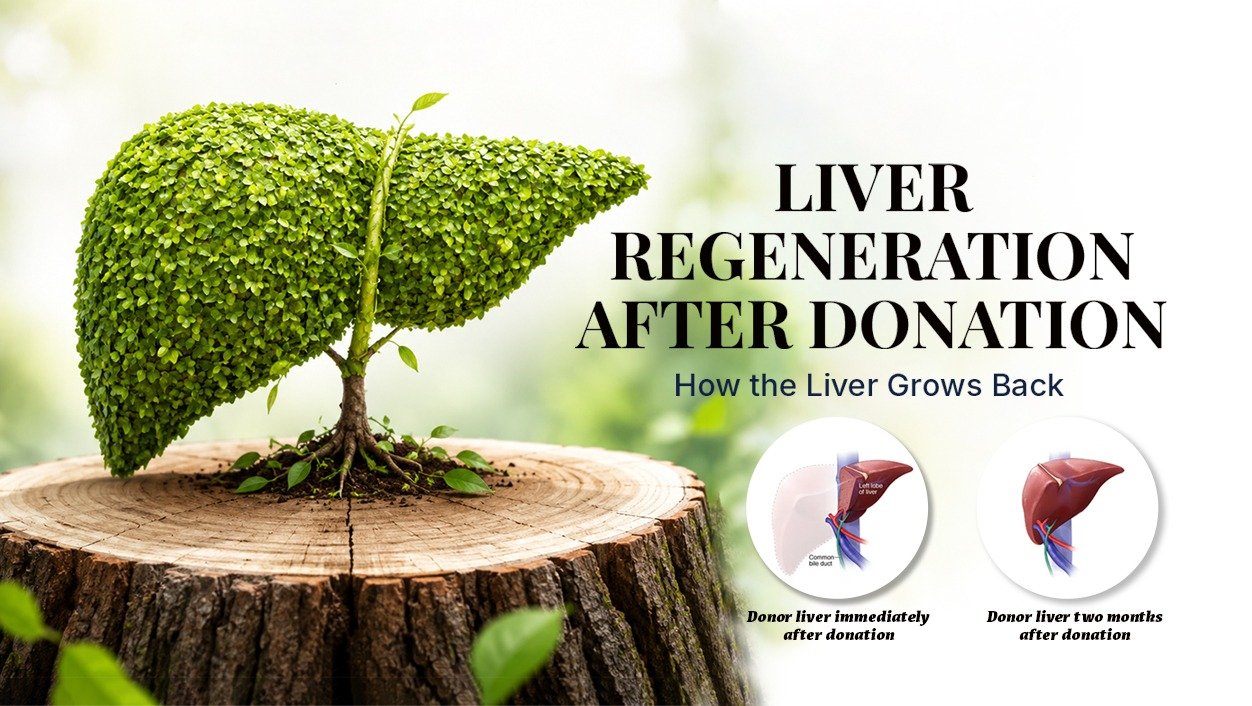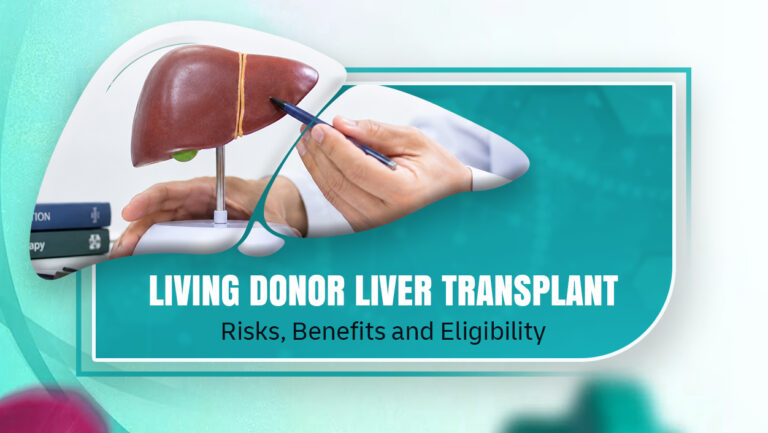
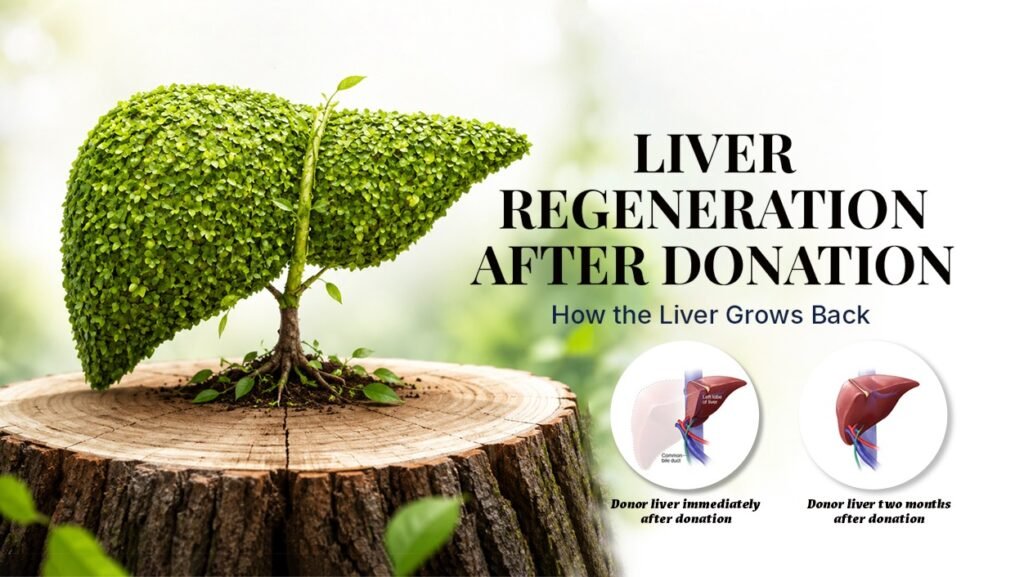
The liver is unusual among human organs because it can restore much of its lost mass after part of it has been surgically removed. This ability makes living donor liver transplantation possible: a healthy person can donate a portion of their liver, while the remaining liver tissue adapts after surgery.
But the phrase “the liver grows back” can be misleading.
The removed section does not grow back as a separate piece. Instead, the liver that remains increases in volume and restores the tissue needed to support normal liver function. The transplanted portion in the recipient also undergoes growth after transplantation.
Does the Liver Really Grow Back After Donation?
Yes, but not in the way a cut tree branch grows again.
During living donor liver transplantation, surgeons remove a carefully selected portion of the donor’s liver. The amount removed depends on the graft required by the recipient and, critically, how much liver can safely remain in the donor.
After surgery, the remnant liver begins changing its size and activity. Liver cells respond to the reduction in liver mass, and the remaining tissue increases its functional capacity.
This is generally described as liver regeneration, although the process is more accurately understood as restoration of liver mass and function rather than recreation of the exact anatomy that was removed.
Research using CT-based liver volumetry shows that regeneration is rapid, particularly during the first few months after donation.
What Happens to the Donor’s Liver After Surgery?
Immediately after donation, the donor has a smaller liver remnant. The liver does not wait for the surgical wound to heal before responding. Changes in liver volume begin early.
The speed of this response varies between individuals and depends partly on the amount of liver remaining after surgery.
In the large Adult-to-Adult Living Donor Liver Transplantation Cohort Study, which included 350 donors, donors had restored an average of about 80% of expected liver volume by three months. The researchers described the restoration during this period as rapid but incomplete.
Another study following donors over several years found that regeneration was fastest during the first three months and became slower afterwards. The degree of restoration differed according to the type of liver resection and the amount of liver that remained.
This is why a single statement such as “the liver completely grows back in two months” does not accurately describe every donor.
Explore : Tests Required Before a Liver Transplant in India
How Fast Does Liver Regeneration Occur?
There is no universal regeneration timetable.
The first weeks are particularly active. In one study of living liver donors, volumetric growth was already measurable during the first postoperative week, with substantial variation between individuals.
A larger multicentre study found that donor liver volume had reached approximately 79% of the predonation volume at three months and approached 88% at one year in the donors with available follow-up imaging.
Other research has reported different percentages because studies use different donor groups, surgical procedures, measurement methods and follow-up periods.
The practical point is straightforward: regeneration is fastest early on, then gradually slows.
Does the Liver Return to Its Original Size?
Not necessarily to exactly the same volume.
This is one of the most commonly misunderstood aspects of liver regeneration after living donation.
The liver can restore a substantial proportion of its previous volume without reproducing the exact shape and anatomical arrangement it had before surgery. In one study of right-lobe donors, the remnant liver increased from approximately 45% of the original liver volume immediately after surgery to nearly 69% at one month and approximately 90% at six months.
Another long-term study found continued volume restoration after the first year, with regeneration becoming progressively slower over time.
Therefore, “normal recovery” should not be interpreted as requiring the liver to return to precisely its original volume on a fixed date.
Why Can the Liver Regenerate?
The liver contains cells capable of responding to a reduction in liver mass. After partial removal, the remaining tissue undergoes biological changes that support restoration of liver mass and function.
This response is closely linked to the liver’s role in metabolism, protein production, detoxification and other essential functions.
The process is regulated rather than uncontrolled. The liver adjusts its size in relation to the body’s requirements, and research into liver regeneration continues to examine how individual liver cells and their surrounding environment contribute to this response.
What Can Affect Liver Regeneration After Donation?
Regeneration does not occur at exactly the same rate in every donor.
The amount of liver remaining after surgery is important. Studies have also identified relationships between regeneration and factors such as donor liver volume, body size and the type of resection performed.
Age can also influence the rate of volumetric recovery. A 2025 study comparing older and younger right-lobe donors found lower regeneration rates among older donors at one, three and six months.
These findings are one reason donor assessment is extensive before surgery. The transplant team must establish that enough healthy liver will remain after donation and that the procedure is appropriate for the individual donor.
Liver Regeneration Is Not the Same as Surgical Recovery
This distinction matters.
The liver may be regenerating while the donor is still recovering from the operation itself. Living liver donation involves major abdominal surgery, so recovery also includes healing of the incision, restoration of physical strength and return to normal activities.
NIDDK notes that living donor transplant surgery is performed on the donor and recipient at the same time, while recovery and return to normal activities depend on the individual and the course of recovery.
A donor therefore should not use liver regeneration alone as a measure of whether the body has completely recovered.
Follow-up appointments, blood tests and any imaging requested by the transplant team remain important parts of donor care.
Frequently Asked Questions
How long does liver regeneration take after donation?
Most volumetric regeneration occurs during the early months, particularly the first three months, but the process can continue more slowly afterwards. There is no single recovery point that applies to every donor.
Does the donated part of the liver grow back?
No. The exact portion removed during surgery does not grow back as a separate anatomical section. The remaining liver tissue enlarges and restores much of the lost liver mass.
Can the liver regenerate after partial removal?
Yes. Liver regeneration after partial hepatectomy is well documented, including in living donors. The degree and speed of volume restoration vary between individuals.
Does liver regeneration mean the liver becomes exactly the same as before donation?
Not necessarily. Liver volume can increase substantially without returning to exactly the same volume or anatomical configuration as before surgery. Liver function and liver volume are related but are not identical measures.
Can a living donor return to normal life?
Many living donors return to their usual activities after recovery from surgery, but the timing varies. The transplant team determines when a donor can safely resume particular activities based on their individual recovery.
The Key Point About Liver Regeneration
Liver regeneration after living donation is better understood as adaptation of the remaining liver rather than the growth of a replacement organ.
The response begins early, is most rapid during the first few months and gradually slows. The final amount of volume restoration varies according to the donor, the amount of liver remaining and the surgical procedure.
For anyone considering living liver donation, the more useful question is therefore not simply, “Will my liver grow back?”
It is: How much healthy liver will remain, how is it expected to recover, and how will my transplant team monitor that recovery?
Those questions are answered through detailed donor assessment, surgical planning and postoperative follow-up rather than by a fixed regeneration timeline.
Planning Liver Transplant Care in India?
Retentia Lifecare coordinates specialist case review, hospital selection and treatment support for international patients considering liver transplantation in India.
Share your medical reports and speak with our care coordination team about the next step.